
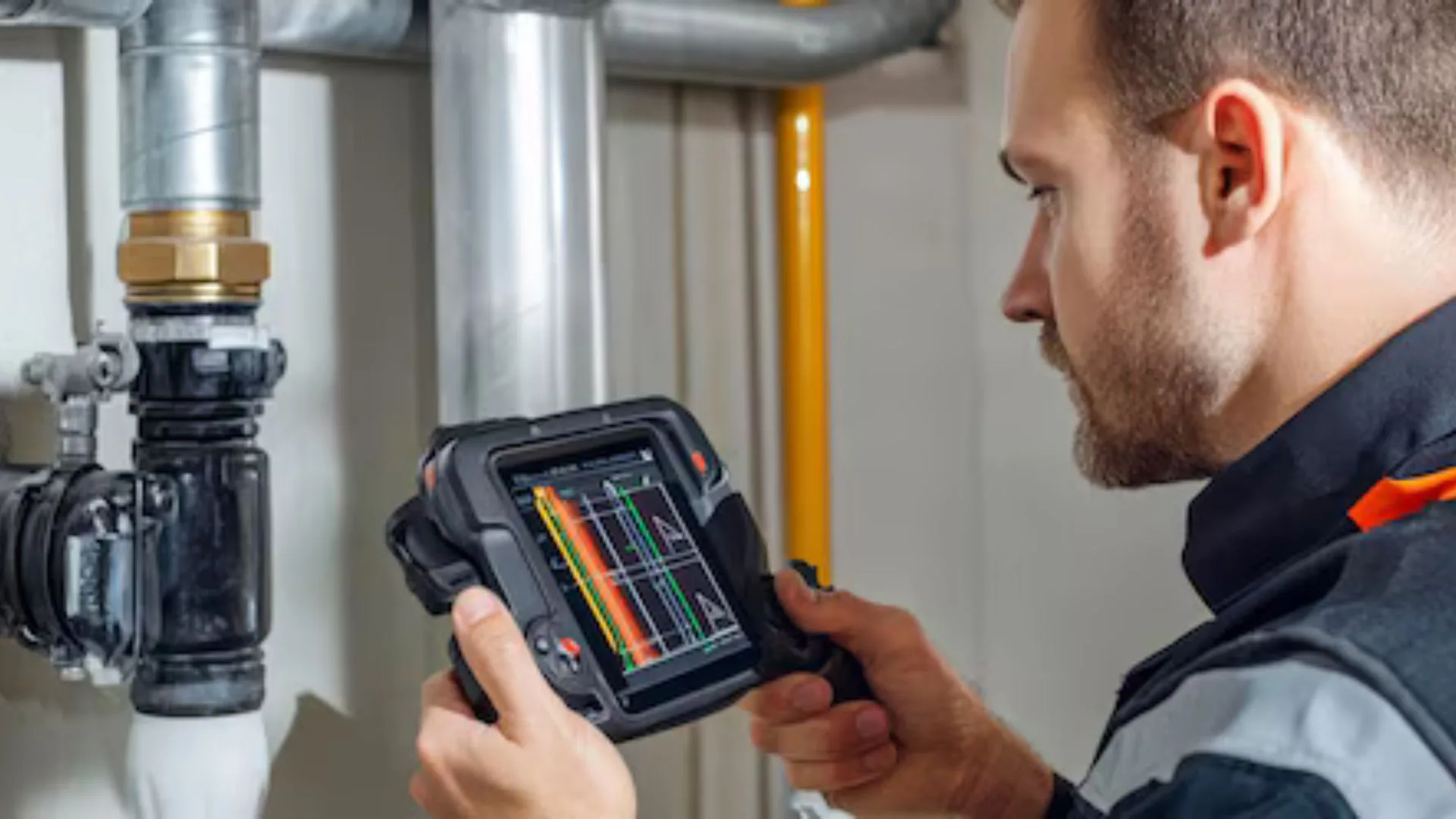
A surprising number of leak calls start the same way: a water bill that's noticeably higher than usual with no visible sign of a problem anywhere in the house. That gap, a real leak with no obvious puddle, is exactly what electronic leak detection is built for. Rather than guessing or opening walls speculatively, we use acoustic and thermal detection equipment to locate the leak's actual position before any demolition happens.
Slab leaks are a specific and common version of this in Folsom, because many newer homes are built on concrete slab foundations. If you are not sure whether yours is, the original plans or a look at the crawlspace access will tell you. A copper or PEX line running under that slab can develop a leak from ground movement, an installation flaw, or simple age. The water often travels along the slab before surfacing somewhere unexpected, sometimes as a warm spot on the floor, a damp patch in the garage near the water heater, or moisture wicking up through carpet nowhere near the actual leak.
Sacramento County's own habitat plan describes cemented hardpan layers a few feet down and soils with high shrink-swell potential in parts of the eastern county, and ground that moves with the seasons can stress pipes under a slab. It's not something we can prevent, but it's part of why we recommend an actual leak-detection call rather than waiting to see if a suspiciously high bill resolves itself. A slab leak that continues to run causes more foundation and flooring damage the longer it's left alone.
Detection is only half the job. Once we've located a slab leak, the repair approach depends on the line's location and the leak's severity. Sometimes a localized slab penetration to access and repair the specific section is the right call. Other times, rerouting the line through the attic or an accessible wall cavity avoids cutting the slab at all. We'll walk through both options and the real cost difference between them before starting anything.
Above-slab leaks get the same electronic-detection treatment. A leak inside a wall, under a bathtub, or in a crawlspace shows up the same way to acoustic equipment as a slab leak does, without us needing to open drywall speculatively in three different spots hoping to get lucky. If a leak has already caused visible water damage to drywall, flooring, or has led to mold growth, that restoration work is handled separately from the plumbing repair itself, and we'll tell you clearly which parts of the job fall into which category. Any repair we perform follows California Plumbing Code (based on the Uniform Plumbing Code) standards.
Emergency Leak Detection in Folsom, Day or Night
Some leaks can wait for a weekday appointment and some cannot. Water rising through a floor, a ceiling stain that is spreading, or a meter that spins fast with every fixture off all point to a leak that is actively causing damage. Our 24/7 emergency line is built for those calls.
We start by stopping the loss, then locate the leak electronically so the repair opens as little of your home as possible. If water is already in the structure, we tell you plainly what to do next and can bring in our water damage restoration team.
Do this while you wait for the crew
- Shut off the main water valve at the house. If you cannot find it, say so when you call and we will talk you through it.
- Turn off power to any room where water is dripping through a ceiling or pooling on the floor.
- Move rugs, electronics, and furniture out of the wet area.
- Take a photo of the damage and the water meter dial for your records.
- If water is coming from the meter box or the street side of the meter, that is City pipe. The City of Folsom takes leak reports at 916-461-6177 from 7 a.m. to 3:30 p.m. and at 916-461-6400 for after-hours water emergencies.
When the water meter keeps running with everything off
This is the situation we hear about most. A homeowner shuts off every faucet, appliance, and irrigation zone, then finds the meter dial still turning. Sometimes the first clue is a water bill that has crept up over a few months, or a notice from the utility that usage looks high.
A moving meter with the house off means water is escaping somewhere on your side of the meter. It could be a toilet, an irrigation line, the line from the meter to the house, or a leak under the slab. We narrow it down in stages, so you pay to find the actual source and not to guess at it.
Slab leaks: damp floors, warm spots, and the sound of running water
Slab leak callers describe the same few signs. Water seeping up through a floor or a garage edge, a warm patch on tile, a floor that feels damp near an exterior wall, or the sound of running water when nothing is on. Some have already had a plumber out who could not find the source.
We locate the leak first and mark it on the floor, then talk through the repair options before anyone breaks concrete. Many people also ask whether we do the repair after we find the leak. We do, and we explain the choices between a spot repair and rerouting the line.
Leaks in ceilings, walls, and under the house
A ceiling stain from an upstairs bathroom, a wet spot on a wall that keeps coming back, or damp soil in a crawlspace are common reasons people call. Often the visible spot is not where the water starts, because it travels along framing before it shows itself.
We trace the water back to the source using the same acoustic tools we use under slabs, so the opening in the drywall or flooring stays small. Tell us when you call whether the stain is under a bathroom, a kitchen, or a roof, and whether it grows after rain or only when someone uses water.
Leaks between the meter and the house, and in outdoor lines
Many leak calls involve the service line, which runs from the meter to the house, and sometimes much farther on larger lots. Callers mention wet patches in the yard, unusually green strips of grass, a low pressure drop, or a meter that runs even with the house off.
Irrigation lines, hot tubs, and pool plumbing also come up often. Those leaks are real, but they are fixed at different places than an indoor line, so we check them separately to avoid replacing the wrong pipe.
Signs of a hidden or slab leak
- Water bill increased with no clear explanation
- A warm spot on the floor (often a sign of a hot-water slab leak)
- The water meter still spins when every fixture in the house is off
- Damp carpet, baseboards, or drywall with no visible source
- The sound of running water when nothing is turned on
From call to finished job
You reach out
Call or message, tell us what's up.
We set a time
A real window, not a guess.
We explain the fix
Clear pricing before we start.
Job done
Tidy, checked, and explained.
Common questions
Do you offer emergency leak detection in Folsom at night or on weekends?
Yes. Our emergency line is open around the clock. If water is actively damaging your home, call right away and we will send a technician as soon as we can and talk you through shutting the water off.
How do you find a leak without tearing up my floor?
We use acoustic and thermal leak-detection equipment to pinpoint the leak's location electronically first, so any opening we do make is targeted rather than exploratory.
Why do slab leaks happen more in some Folsom neighborhoods?
Homes built on a slab, which includes many newer homes, have supply lines running under the concrete, and ground movement over the years can stress those lines. Lot grading and fill under a foundation matter as much as the soil type.
How is a slab leak actually repaired?
Either a targeted slab penetration to access and repair the specific section, or rerouting the line through an accessible wall or attic space to avoid cutting the slab at all. We'll quote both if both are viable.
What if the leak already caused water damage?
We handle the plumbing repair itself. Water damage restoration, drying, and any mold remediation is a distinct service category, and we'll be clear about which part of the job is ours.
Can you find a leak another plumber could not locate?
Often, yes. A leak that is hard to find by sound or by sight usually needs electronic detection and a methodical pressure check. Tell us what has already been tried when you call so we do not repeat it.
Do you do leak detection for commercial or multi-unit buildings?
Yes. For apartment buildings, shopping plazas, and other larger properties we start by narrowing down which line or zone is losing water, then locate the leak. See our commercial plumbing services page for details.