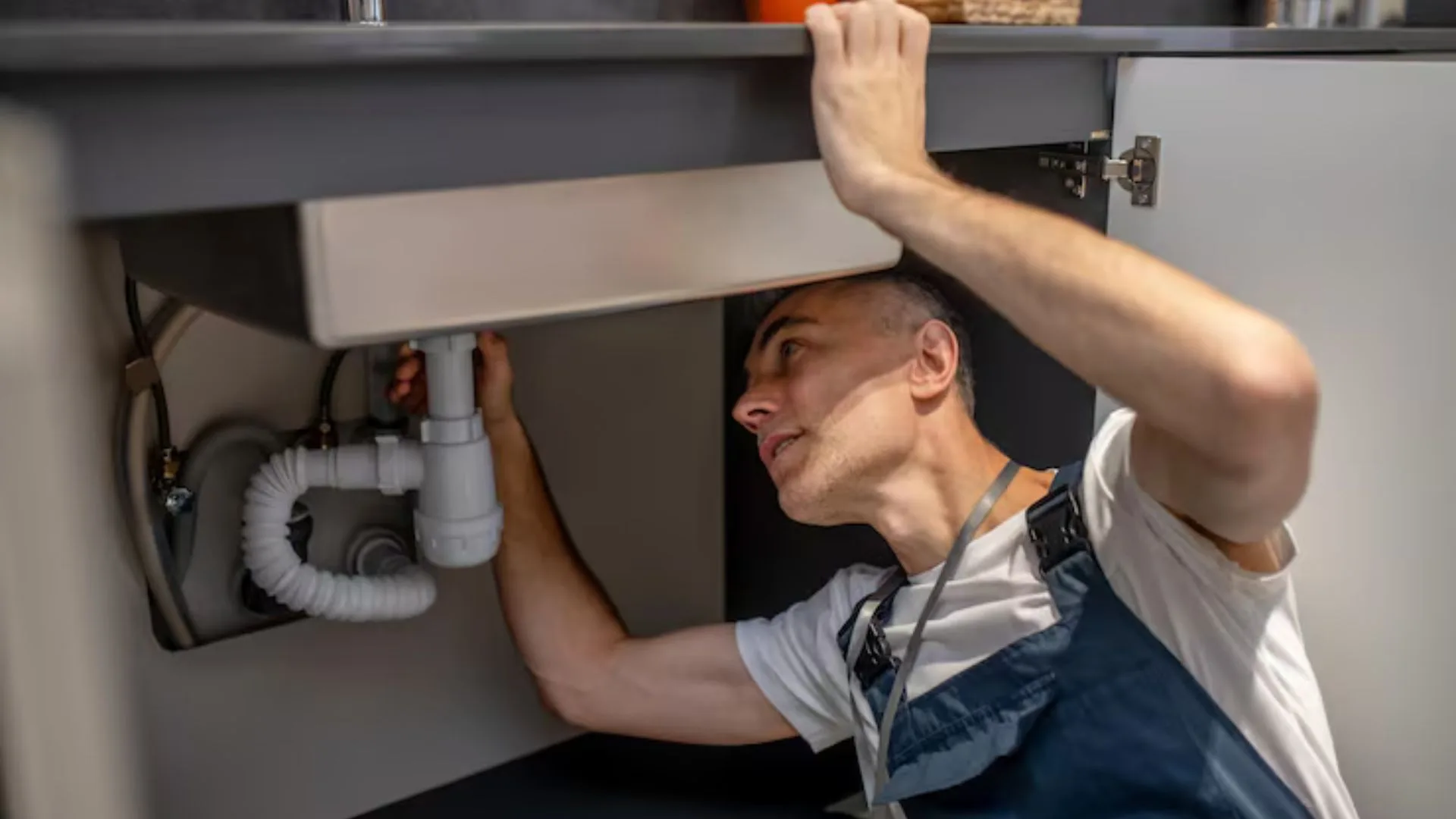
Most drain calls fall into a small number of real patterns, and knowing which one you have changes the fix. A single fixture draining slowly, usually a kitchen sink or a shower, is almost always a localized clog close to that fixture: grease and food buildup in a kitchen line, or hair and soap scum in a bathroom line. A cable snake through the fixture's own drain line clears this quickly, and it usually stays clear for a good while afterward if the underlying cause (grease down the drain, hair not caught by a strainer) doesn't repeat.
A different pattern shows up when more than one fixture backs up at once, a toilet that gurgles when the washing machine drains, or water backing up into a tub when the toilet flushes. That's a signal the clog is further down the line, closer to the main sewer line rather than an individual fixture. It usually needs a bigger tool than a handheld snake to actually clear it, rather than just punch a small hole through the blockage.
That's where hydro jetting comes in. Instead of pushing a cable through a clog, a hydro jetter uses a high-pressure water stream to scour the entire interior wall of the pipe, clearing grease buildup, mineral scale, and root intrusion in a way that snaking alone often can't fully resolve. It's a more thorough fix for a main line that's had recurring problems, though it's not always the right first step for a simple, isolated fixture clog where it would be overkill.
Folsom's older neighborhoods, particularly around the Historic District, have mature landscaping with large, established trees, and tree roots seeking moisture are a real, ongoing cause of main sewer line blockages in older clay pipe. If your home has had more than one main line clog in the past year or two, that's worth investigating with a camera inspection rather than treating each clog as an isolated event. Root intrusion tends to recur and gets worse over time if the entry point isn't addressed.
We diagnose before we commit to a tool, running a camera inspection when the clog pattern suggests something beyond a simple fixture blockage. That way, you're not paying for hydro jetting on a job a five-minute snake would have solved, and you're not paying for repeat snake visits on a main line problem that actually needs a root-cutting pass to resolve for good.
When a camera inspection points to a structural problem in the line itself, a crack, a belly, or significant root damage, rather than just a clog sitting in an otherwise sound pipe, that's the point where it becomes a job for our sewer line repair service instead of another cleaning visit. All work follows California Plumbing Code (UPC-based) drainage and venting requirements.
Emergency Drain and Main Line Backups
Most clogs are an annoyance. A few are emergencies. If water is coming up through a floor drain or tub, a toilet will not stop overflowing, or several fixtures back up at once, the main line is blocked and the situation is getting worse with every flush and every load of laundry.
We run a 24/7 line for these calls. A technician will clear the blockage, camera the line if the pattern points to something deeper, and tell you what caused it so it does not return in a month.
Stop making it worse
- Stop using water in the house. That means no flushing, showers, dishwasher, or laundry.
- Keep children and pets out of any area where wastewater has backed up.
- Do not pour chemical drain openers into a fully blocked line. They can splash back and make the repair unsafe.
- Note which fixtures are backing up and in what order, and tell us when you call.
Drain cleaning across Folsom's neighborhoods
In the older streets near Sutter Street and Lake Natoma, mature trees and aging sewer laterals mean main-line clogs that keep coming back. In the 1990s neighborhoods of Natoma Station, Prairie Oaks, and Broadstone, the usual culprits are grease and wipes in kitchen and bath lines. Empire Ranch, Willow Creek Estates, and Briggs Ranch fall somewhere in between. Tell us your street and neighborhood, and we will decide between a quick snake and a camera inspection before we arrive.
Kitchen sink and single-fixture clogs
A slow kitchen sink is the single most common drain complaint. Grease, food residue, and soap film build up in the trap and the first stretch of pipe, and the sink drains a little slower each week until it stops. The City of Folsom's wastewater team says cooking grease, eggshells, and coffee grounds should go in the trash, not down the drain or the garbage disposal.
Shower and tub drains clog differently. Hair and soap collect near the stopper or a few feet down the line. Both are quick jobs when they are caught early, and we will tell you if the pattern suggests the problem is farther down.
Main line clogs and drains that back up together
When a toilet, a tub, and a floor drain all misbehave at once, the problem is the main line and not any one fixture. Callers describe gurgling when the washer drains, water rising in a tub when the toilet is flushed, or a drain in the yard that overflows.
A main line clog can come from grease, roots, or an item that should not have gone down the line. The City of Folsom reports that grease and large debris are its top maintenance issues for its own sewer mains, and the same culprits show up in private lines. We clear the line, camera it if the pattern repeats, and tell you what we saw.
Signs you have a main-line clog, not just a slow fixture
- More than one fixture backs up at the same time
- Gurgling from a toilet or drain when another fixture runs
- Recurring clogs in the same drain every few months
- Sewage odor near a floor drain or cleanout
- Water backing up into a tub or shower when the toilet flushes
From call to finished job
You reach out
Call or message, tell us what's up.
We set a time
A real window, not a guess.
We explain the fix
Clear pricing before we start.
Job done
Tidy, checked, and explained.
Common questions
Do you do emergency drain cleaning in Folsom after hours?
Yes. If a drain is overflowing or sewage is backing up into your home, call our 24/7 emergency line. We will ask which fixtures are affected so we can arrive with the right equipment.
Snaking or hydro jetting: which do I need?
Snaking is right for a single slow fixture. Hydro jetting is the better tool for a main line with recurring clogs, grease buildup, or root intrusion, since it scours the whole pipe wall instead of punching through one spot.
Why does my drain clog again a few months later?
If it's the same drain repeatedly, there's usually an underlying cause, root intrusion, a persistent grease buildup point, or a pipe with a slight backward pitch. A camera inspection identifies which one before we recommend a fix.
Do tree roots really get into sewer pipes?
Yes, especially into older clay pipe with joint seams, which roots seek out for moisture. It's a common issue in Folsom's older, mature-tree neighborhoods.
Is hydro jetting safe for older pipes?
We assess pipe condition first. Hydro jetting is safe for sound pipe but we adjust pressure or recommend an alternative if a camera inspection shows the pipe itself is already compromised.
Can you clean yard drains, trench drains, or driveway culverts?
We can often clear yard drains and trench drains, and we can look at culvert pipes that are plugging. Tell us what the drain is and where it is when you call, because outdoor drains vary a lot from home to home.
Should I use chemical drain cleaners first?
We recommend against it for a fully blocked drain. Chemical cleaners can sit in the line and make the repair less safe for the technician, and they rarely clear grease or roots. Call us first.