If you smell gas, the distinctive rotten-egg odorant added to natural gas specifically so leaks are noticeable, leave the house immediately, don't operate any light switches or electronics on your way out, and call from outside once you're safely away. Then call your gas utility's emergency line and us. This isn't a situation to wait on, even a small suspected leak warrants leaving the property first and asking questions after.
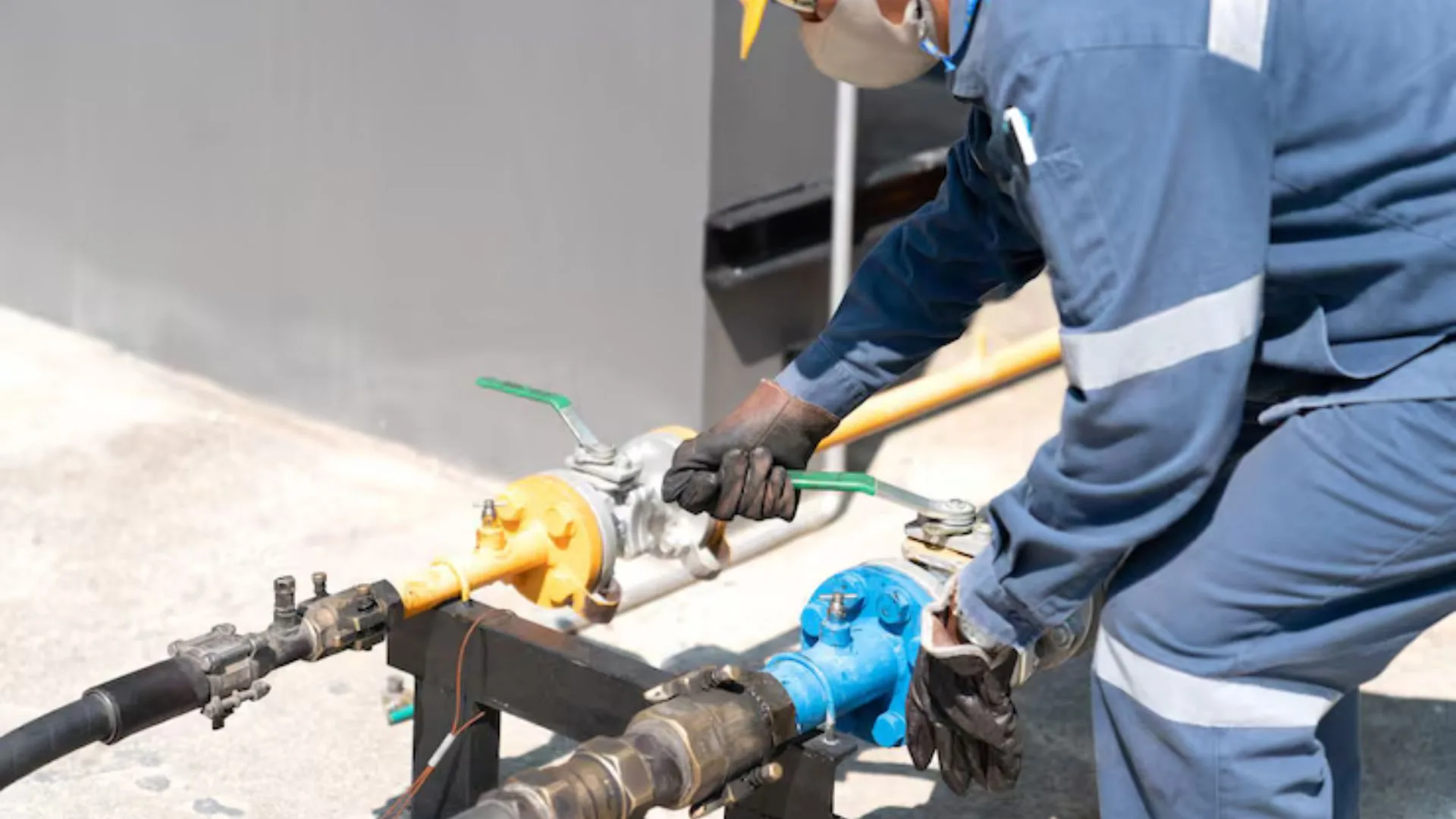
Gas leaks at the plumbing level usually originate at connection points rather than mid-pipe: a fitting that's loosened over time, a flexible connector to an appliance that's degraded or was improperly installed, or a valve that's failed to seal completely. We use a combustible gas detector to pinpoint the exact leak location rather than guessing based on where the smell seems strongest, since gas travels and pools in ways that don't always match its actual source.
New gas line installation comes up most often around a specific appliance change: adding a gas range where the kitchen previously had electric, installing a gas fireplace insert, or running a line to an outdoor kitchen or fire feature. Each of these requires proper sizing for the appliance's BTU demand, correct pipe material and joint sealing per code, and a pressure test before the line goes into service, not just before it's covered by drywall or buried.
Water heater and furnace gas connections are the most common repair call outside of a full leak, a corroded flexible connector, a shutoff valve that's seized and won't fully close, or a connection that was never properly sealed during a prior installation. We check these as a matter of course any time we're doing water heater work, since a gas connection issue found during an unrelated repair is far better caught early than discovered later.
All gas work we perform is permitted through the City of Folsom where required and inspected before the line is put into service, to California Plumbing Code (UPC-based) gas piping standards. This isn't optional paperwork, it's a genuine safety check on pressure, sizing, and connection integrity that protects you and satisfies insurance and resale requirements down the line.
Any time we install or service a gas appliance, we also check that a functioning carbon monoxide detector is present nearby, since a gas appliance venting improperly is a real and separate risk from a leak at the supply line itself. If your home doesn't have a CO detector near gas appliances or sleeping areas, that's a quick and inexpensive addition worth making alongside any gas line work, not an unrelated upsell tacked onto the invoice. We can install hardwired or battery-powered units during the same visit, so it's one trip rather than a separate appointment for something this important.
Gas Leak Emergencies: Leave First, Then Call
If you smell gas, leave the building. Do not stay to look for the source. PG&E's guidance is to leave the area immediately, call 911, and then call PG&E's 24-hour line at 1-877-660-6789. Signs include a rotten-egg smell, a hissing or whistling sound near a line, and damaged connections at an appliance.
Once the utility has made the area safe, we can repair the plumbing side of the problem. That includes loose fittings, corroded flexible connectors, and seized shutoff valves. We test the repair before the line goes back into service.
If you smell gas
- Leave the house right away with everyone inside, and take pets if you can do so quickly.
- Do not flip light switches, use a lighter, or start a car in an attached garage.
- From outside, call 911, then PG&E's 24-hour line at 1-877-660-6789.
- Call us after the utility has cleared the area so we can repair the cause.
Gas line work across Folsom
Gas calls in Folsom range from appliance hookups in older Historic District homes to new lines for ranges, fireplaces, and outdoor kitchens in Empire Ranch and Broadstone. In the Folsom Plan Area, including Russell Ranch and Mangini Ranch, we work with newer construction where gas appliances are being added. Every line is permitted through the City of Folsom where required and tested before it goes into service.
Gas line inspections and new installations
Some calls are about adding a gas range, a fireplace insert, or an outdoor appliance. Others are about checking a line that has not been looked at in years. A proper inspection finds corroded connectors, loose fittings, and shutoff valves that no longer turn.
We explain what the inspection covers and what a new line requires. Fireplaces, stoves, and dryers each have their own connection requirements, so tell us the appliance model when you call.
If you suspect a gas leak, act immediately
- Leave the house immediately, don't flip switches or use electronics on your way out
- Don't attempt to locate the leak yourself or use an open flame
- Call your gas utility's emergency line from a safe distance
- Call us once you're safely away from the property
- Don't re-enter until the utility or we've confirmed it's safe
From call to finished job
You reach out
Call or message, tell us what's up.
We set a time
A real window, not a guess.
We explain the fix
Clear pricing before we start.
Job done
Tidy, checked, and explained.
Common questions
Who do I call first for a gas leak, you or PG&E?
Leave the house and call 911 first, then PG&E at 1-877-660-6789. Call us after the area is safe so we can find and repair the plumbing-side cause. We do not ask you to stay in a building that smells like gas.
What should I do if I smell gas in my house?
Leave immediately without operating switches or electronics, call your gas utility's emergency line and us once you're safely outside, and don't re-enter until it's confirmed safe.
Can you install a gas line for a new range or fireplace?
Yes, we size and run new gas lines for appliance additions, including permits and a pressure test before the line goes into service.
How do you find a gas leak?
We use a combustible gas detector to pinpoint the actual leak location, rather than guessing based on smell alone, since gas can travel and pool away from its true source.
Is gas line work permitted?
Yes, all gas work is permitted through the City of Folsom where required and inspected before use, which helps document the work for insurance and resale.
Can you hook up a gas stove or convert an appliance to propane?
Appliance hookups are routine for us. Converting an appliance between natural gas and propane involves a manufacturer conversion kit, so tell us the model and fuel when you call and we will confirm what is possible.