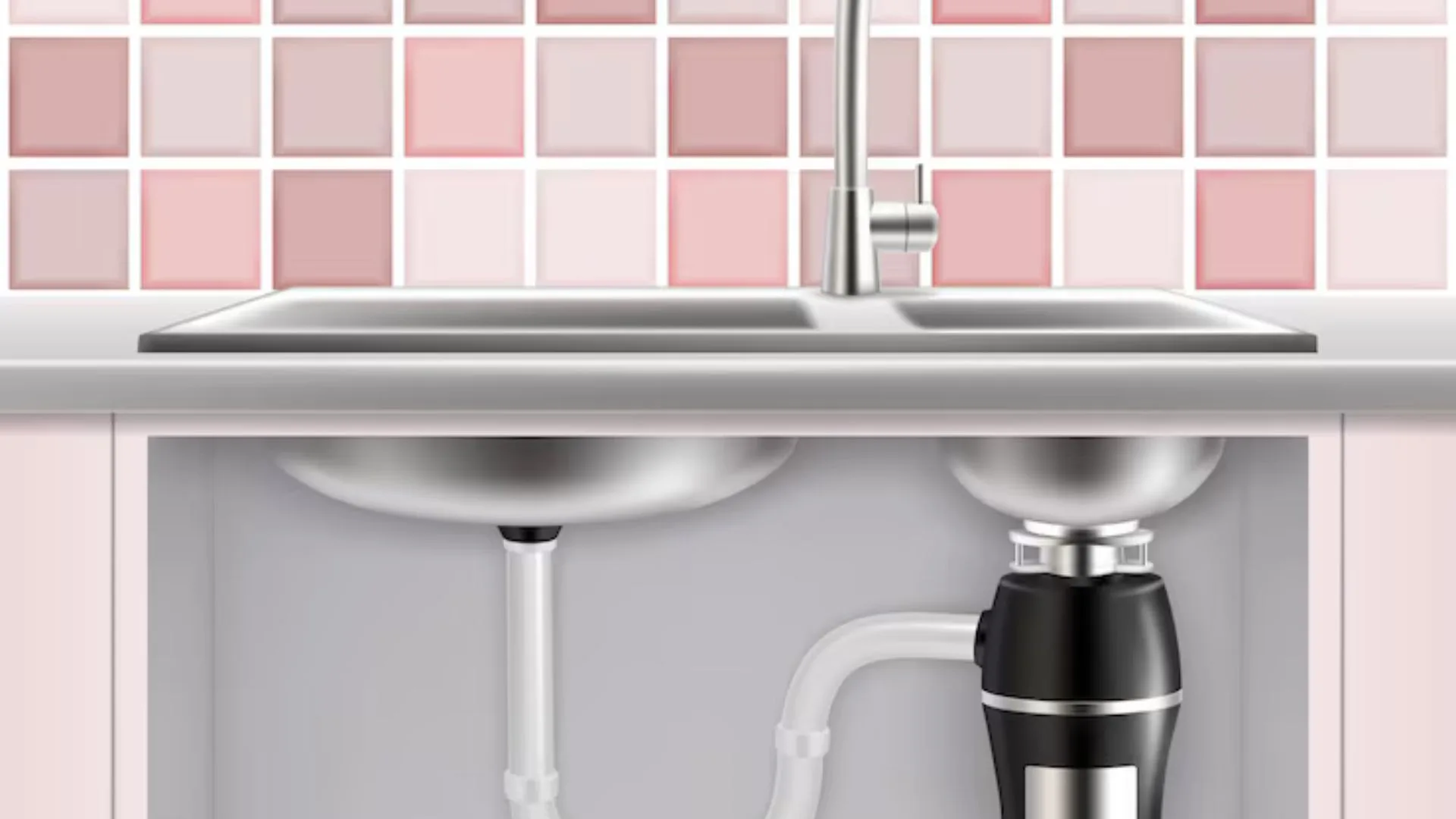
A garbage disposal feels like it should handle anything that fits down the drain, but the reality is it's a fairly delicate motor and blade assembly that's sensitive to specific categories of food waste. Understanding which categories cause problems, and why, goes a long way toward avoiding the jams and premature failures that bring most disposal calls our way.
Fibrous vegetables are one of the most common culprits: celery, corn husks, onion skins, and artichoke leaves all contain long fibers that can wrap around the disposal's spinning blades rather than being chopped cleanly. Once fibers wrap around the blade assembly, the motor has to work harder to spin, which is often what triggers the thermal overload protection that shuts a disposal down and requires a manual reset.
Starchy foods are a different but related problem. Potato peels, pasta, and rice all expand when they absorb water, and that expansion can happen inside the disposal or just downstream of it, effectively creating a soft blockage that isn't a jam in the traditional sense but still restricts flow. A small amount is usually fine, but disposing of a large batch of potato peels or leftover pasta all at once is a common way to end up with a slow or fully clogged drain shortly after.
Grease and fat are worth treating as a hard no, even though they're liquid when warm and seem harmless going down. Grease solidifies as it cools, and it doesn't just coat the disposal itself, it travels further down the line and can build up inside pipes over time, narrowing the diameter and eventually causing a clog that has nothing to do with the disposal directly. Pouring grease into a separate container for disposal in the trash, rather than down any drain, protects your whole drain system, not just the disposal.
Bones, fruit pits, and eggshells fall into a category that surprises people: none of these are actually good for a disposal despite folk wisdom suggesting otherwise. Bones and pits are simply too hard for the blades to process and can chip or dull them over repeated use. Eggshells, contrary to the old claim that they sharpen the blades, actually contribute to buildup, the shell's inner membrane can wrap around the blade assembly similarly to fibrous vegetables.
On the other side, coffee grounds are a genuinely divisive topic even among plumbers. Our honest position is that small amounts are generally fine with plenty of water running. Making it a habit of disposing of large amounts regularly does contribute to buildup over time, since grounds are dense and don't break down the way food scraps do. If your household goes through a lot of coffee, the trash or a compost bin is the safer long-term choice.
Running plenty of cold water, not hot, while the disposal operates and for a short time afterward is one of the simplest habits that meaningfully extends a disposal's life. Cold water keeps any grease that does end up in the system solid enough to be chopped and flushed through rather than melting and coating the disposal's interior, which is the opposite of what warm or hot water does in this specific situation.
A disposal that hums but won't spin is almost always jammed rather than broken, and this is worth knowing before assuming the worst. Every disposal has a manual reset button on the underside of the unit, and most jams clear using the hex-key wrench socket, also on the underside, to manually rotate the flywheel and free whatever's stuck. Never reach into a disposal with your hand to clear a jam, even when it's switched off at the wall, the manual tools built into every standard unit exist specifically so you never need to.
How long a disposal actually lasts depends heavily on which of these habits get followed consistently rather than just occasionally. A well-maintained unit used within the guidelines above can run reliably for 8 to 12 years, while one that regularly processes grease, bones, and fibrous scraps despite the guidance can fail well before that, sometimes within just a few years. If you're replacing a disposal earlier than expected, it's worth an honest look at what's actually been going down it before assuming the unit itself was simply a poor-quality one.
A leak at the top of a disposal, where it connects to the sink flange, is usually a different issue from a leak at the bottom of the unit itself, and it's worth telling us which one you're seeing when you call. A top leak often means the plumber's putty or gasket seal has failed and needs to be redone, a straightforward repair. A leak from the housing itself means the disposal has an internal seal failure and typically needs replacement rather than repair, since that's not a serviceable part on most residential units sold today.
Noise is another useful diagnostic clue worth paying attention to before calling. A loud, metallic grinding sound often means a foreign object, a piece of silverware, a bottle cap, has made its way in and is contacting the blades directly, something that needs to be manually removed rather than ground through. A softer, rattling sound with normal grinding suggests something less urgent, possibly a loose mounting assembly under the sink, which we check and re-tighten as a routine part of any disposal service call since a mount left loose tends to work itself looser over time.
What to avoid putting down your garbage disposal
- Fibrous vegetables: celery, corn husks, onion skins, artichoke leaves
- Grease and fat, even when liquid and warm
- Bones, fruit pits, and large amounts of eggshells
- Large batches of starchy foods like potato peels, pasta, or rice
- Excessive coffee grounds on a regular basis
What the City of Folsom says about grease and disposals
The City of Folsom's wastewater division says its top maintenance issues are blockages from grease and large debris. It advises putting cooking grease, eggshells, and coffee grounds in the trash, not down drains or garbage disposals. It also says not to flush baby wipes or diapers.
The City runs a Fats, Oils and Grease program to help residents and businesses keep grease out of the sewer. Following it protects your disposal and your own drain line as well as the City's mains.
We also serve nearby Rancho Cordova and Fair Oaks, so help is close if you are in one of those areas.
A local question
What does the City of Folsom say about grease and garbage disposals?
The City says cooking grease, eggshells, and coffee grounds belong in the trash, not in drains or garbage disposals, and that grease and large debris are its top sewer maintenance issues. It also asks residents not to flush baby wipes or diapers.